Maijishan Grottoes, Tianshui: clay sculpture on Gansu’s eastern spine
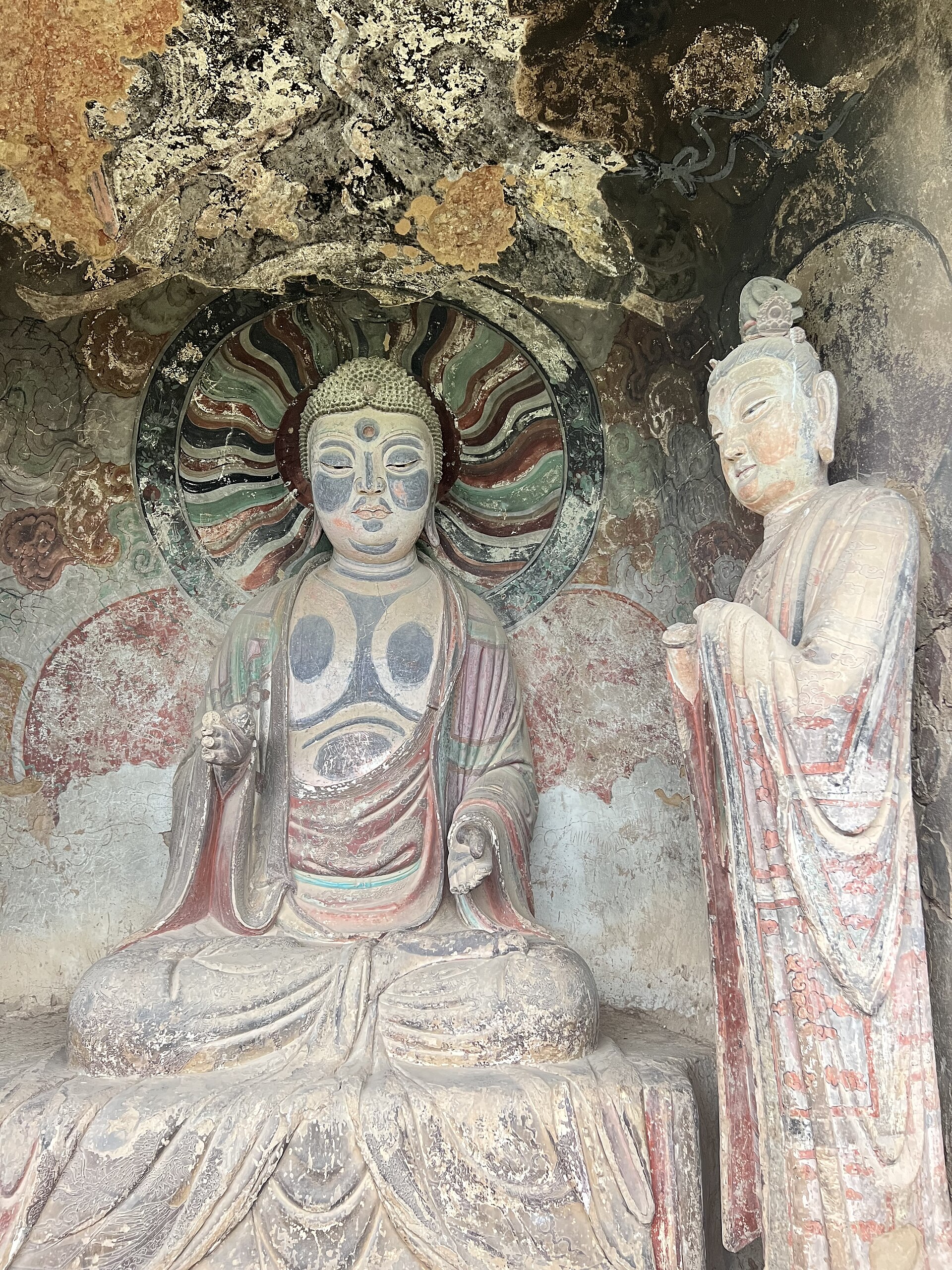
Maijishan (麦积山, “Wheat-stack Mountain”) rises like a haystack in the Qinling foothills near Tianshui, southeast Gansu. It is one of China’s classic grotto complexes — less mural-famous than Dunhuang’s Mogao, more about painted clay sculpture and cliff walkways that cling to the rock. If Hexi is the desert Silk Road, Maijishan is the green eastern chapter of the same Gansu story.
What you are looking at
- Hundreds of niches and caves cut into a steep cliff; many figures are clay over armature, then painted — faces and drapery feel close and human in a way desert murals do not.
- Wooden galleries and stairs stack up the face of the mountain. Heights and exposure matter: if you dislike heights, say so early and stick to lower circuits.
- Compared with Mogao: wetter climate historically favoured sculpture over fragile wall painting; conservation rules and which caves open still change — verify on site what your ticket includes that day.
Getting there from Lanzhou
- High-speed rail: Lanzhou West → Tianshui South is the usual backbone (journey often around two hours; check current timetable). Ordinary trains also serve Tianshui station closer to the old town.
- From Tianshui South or city: taxi, ride-hail, tourist bus or hired car to the scenic area — commonly 45–90 minutes depending on traffic and which gate you use.
- Day-trip from Lanzhou is possible with an early train; an overnight in Tianshui is kinder if you want the museum, Fuxi temple area, or a slower cliff walk. Do not stack Maijishan onto a same-day Hexi departure west.
Best months
- April–June and September–October: milder temperatures, clearer walking on the galleries, greener hills than Hexi’s desert belt.
- July–August: hotter and busier; bring water and sun cover for the climb between caves.
- Winter: quieter and colder; ice on steps is possible — ask at the gate about open sections. Hours shorten in low season; verify before you go.
Etiquette, safety and booking
- No touching sculptures; no flash in caves; follow staff on which niches are closed for conservation.
- Wear grippy shoes; hold rails on steep wooden walks; skip the high galleries if weather is wet or you feel unsteady.
- Many Chinese scenic areas now use real-name advance booking (often WeChat / official mini-program). Foreign passport holders: carry your passport; if an app blocks you, buy or re-book at the window when available — do not rely on a blog’s “guaranteed” slot. Confirm rules for your date on site or via the operator’s current notice.
- We do not invent a single CNY ticket figure here. Snapshot: 31 October 2026 — prices and which caves open change; verify against the ticket desk.
East line vs Hexi — telling the Gansu story
Hexi (Zhangye, Jiayuguan, Dunhuang) is the classic desert corridor most first-timers chase. Maijishan sits on a different spine: forested hills, clay Buddhas, and Tianshui’s role as an eastern Silk Road hinge toward Shaanxi. Pairing both in one short trip means extra rail days — do not pretend they are “next door.” For corridor weeks see the 7-day Hexi itinerary and Hexi or Gannan first?; add Maijishan when you have a free day on the Lanzhou–Xi’an axis or a dedicated Tianshui overnight.
East grottoes or Hexi week?
We help you choose nights and rail links in English. We do not sell tickets or packages.
Sources
- Public destination descriptions for Maijishan / Tianshui; sculpture vs mural contrast framed for independent visitors.
- Access pattern: Lanzhou–Tianshui rail + road transfer — schedules change; verify on travel day.
- Booking and prices: verify on site / official channels (note dated 31 October 2026).
Independent guide, not a tour operator. Open caves, hours and tickets change — verify against the scenic area on your date.